
How to design a screening conversation candidates actually trust
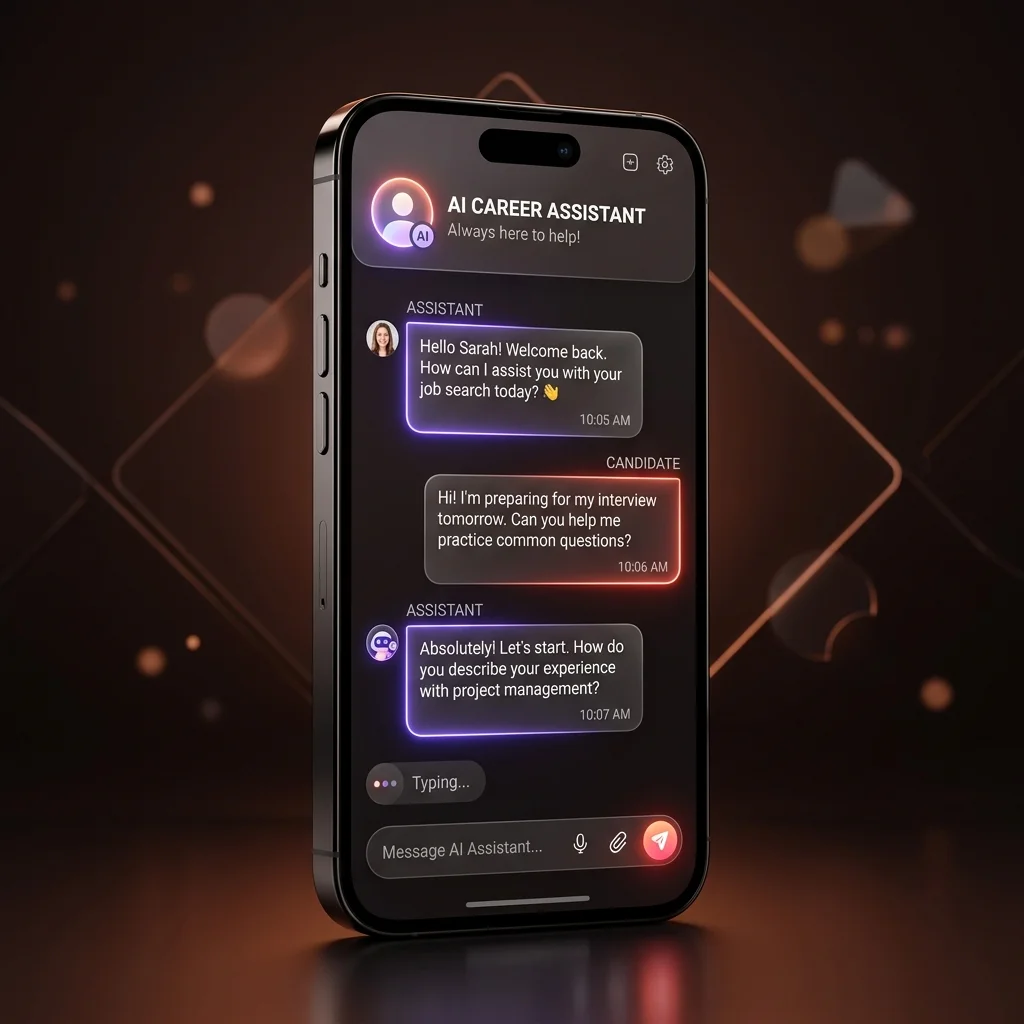
Automated screening has a reputation problem, and it is earned. Done badly, it feels like an interrogation: a barrage of impersonal questions, a black-box rejection, no sense of whether a human will ever see your answers. Candidates resent it, and the team loses good people who refuse to play along. But the problem is not automation itself. It is the design.
A well-designed screening conversation does the same job, qualifying candidates against real requirements, while feeling like a respectful, two-way exchange. The difference comes down to a few principles that are easy to state and easy to get wrong.
Ask only what you will actually use
Every screening question should map to a real requirement for the role. If you would not reject a candidate for the answer, do not ask the question. Padding the screen with nice-to-knows turns a two-minute conversation into a chore and signals that you value your process over the candidate's time. Keep the gates real and keep them few.
Give before you take
A screen should not be purely extractive. Let candidates ask their own questions, about pay, schedule, location, and answer them honestly in the same conversation. When the exchange flows both ways, screening stops feeling like a test and starts feeling like a mutual fit check, which is what it actually is.
Be transparent about what is happening
Candidates should know they are talking to an assistant, know what it is screening for, and know that a person is involved in the decision. Hidden automation breeds suspicion. Honest automation builds trust. "Joy is going to ask a few quick questions to make sure this role fits" is a sentence that costs nothing and changes the whole tone.
Make rejection respectful and fast
If a candidate does not meet a hard requirement, tell them quickly and kindly, in the moment, rather than leaving them in silence. A fast, clear no is a kindness, it lets the candidate move on instead of waiting for a call that will never come. And where it makes sense, point them toward roles that might actually fit.
Screening as the start of the relationship
The screening conversation is often the very first real interaction a candidate has with your company. Whether it feels like an interrogation or a welcome sets the tone for everything after it, including whether your offer gets accepted. Designed well, with Joy doing the asking, it qualifies candidates at scale and still leaves them feeling like a person who wanted to talk to them was on the other end. That is the whole goal.
Keep reading
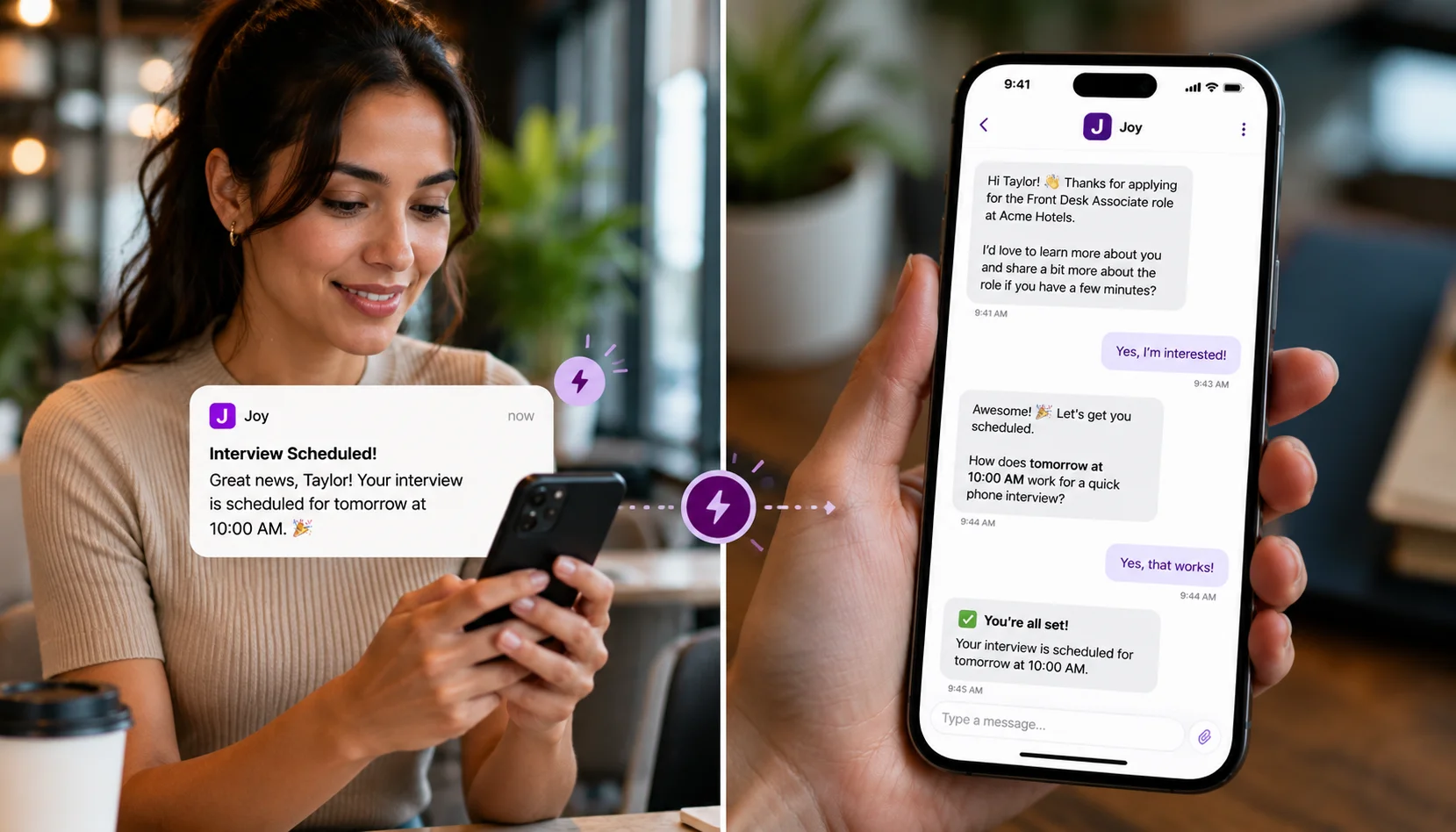
The first reply wins: why response speed decides your best hires
Strong candidates apply to several jobs at once and commit to whoever answers first. Here is why the first reply matters more than the perfect job ad, and how to make it instant.

How to double your hiring throughput without adding recruiters
High-volume hiring usually means hiring more recruiters too. It does not have to. Here is how to grow throughput by removing the repetitive work that eats your team's day.

What conversational AI actually does in hiring (and what it doesn't)
Conversational AI in recruiting is easy to misunderstand. It is not a chatbot that replaces recruiters. Here is a grounded look at the work it does and the decisions it leaves to people.