
The first reply wins: why response speed decides your best hires
A great candidate rarely applies to one job. They apply to four, sometimes ten, in a single sitting. Then they sit back and wait to see who reaches out. The company that answers first does not just get a head start, it usually gets the hire. By the time a slower team sends its templated acknowledgement two days later, the conversation has already happened somewhere else.
This is the part of hiring that job descriptions and employer-brand campaigns cannot fix. You can write the most compelling ad in your market, but if the follow-up takes 48 hours, the ad was working for a competitor. Speed is not a nice-to-have layered on top of a good process. For in-demand roles, speed is the process.
Why minutes matter more than messaging
Attention has a half-life. The moment someone hits submit, they are as interested in your role as they will ever be. Every hour that passes, that interest decays, they take another interview, accept another offer, or simply move on. Responding in minutes catches candidates at peak intent. Responding in days catches them after they have mentally moved on, if it catches them at all.
The frustrating thing is that most teams know this. They are not slow because they do not care. They are slow because a human recruiter cannot watch the inbox at 9pm on a Sunday, cannot screen forty applicants in the same hour, and cannot be in two interviews at once. The bottleneck is not effort. It is the limits of a single person's time.
What an instant first reply actually looks like
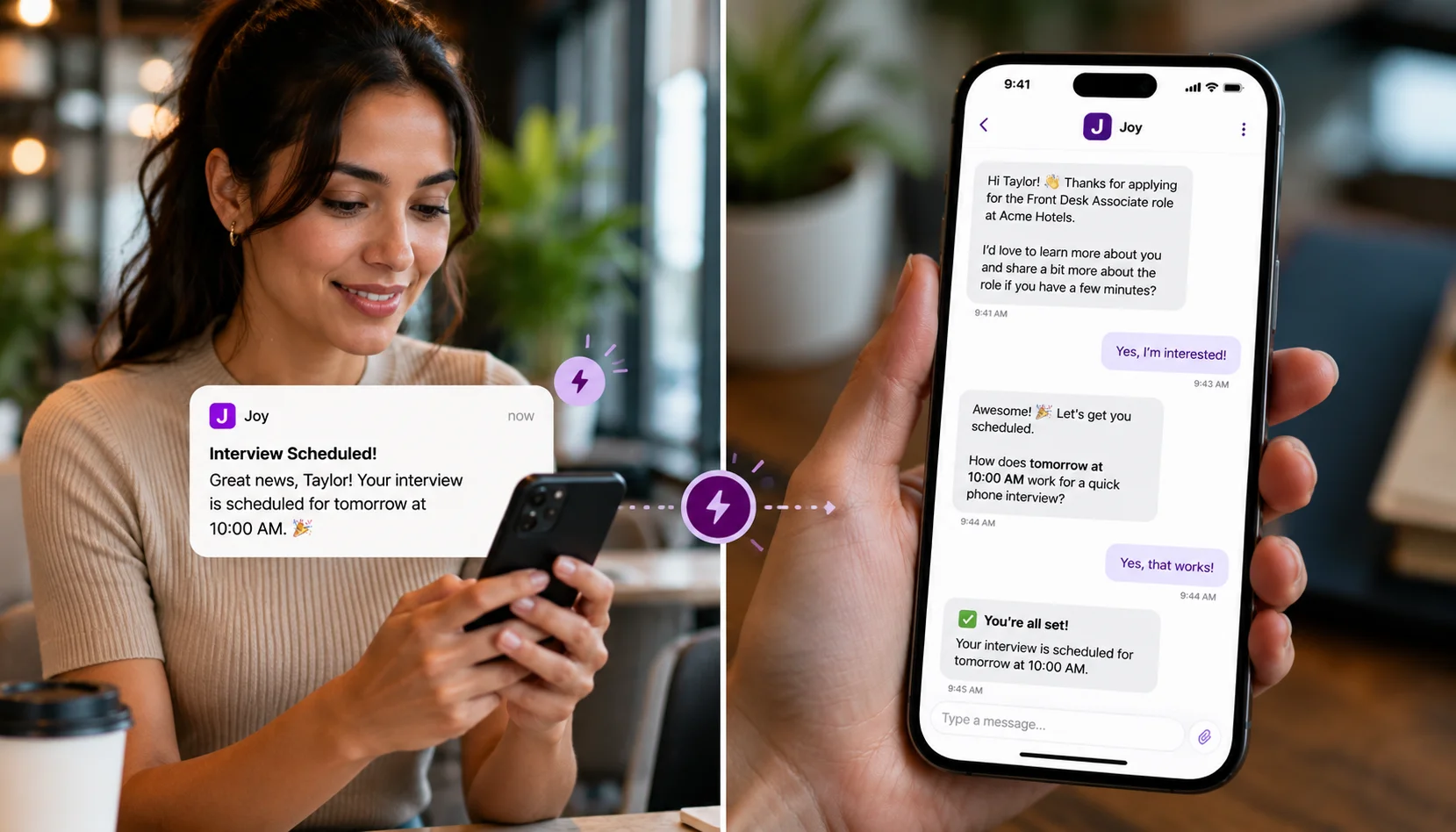
An instant reply is not an auto-responder that says "thanks, we'll be in touch." That is the opposite of helpful, it tells the candidate they have entered a queue. A real first reply does work: it confirms the role, answers the questions the candidate actually has, and moves things forward.
When Joy, WIGOH's AI assistant, answers an applicant, the candidate can ask about pay, schedule, and location and get a straight answer in the moment. They can complete screening questions while they are still thinking about the job. They can pick an interview time before they close the tab. None of that waits for a recruiter to come back from lunch.
Speed without losing the human part
The fear teams have is that fast means cold. It is the opposite. A candidate who gets a warm, useful answer at the moment they need it feels respected. A candidate who waits two days feels like a number. Responsiveness is one of the clearest signals you can send about what it is like to work for you.
The teams that win the best people are not always the ones with the biggest budgets or the most famous brands. They are the ones who show up first, answer honestly, and make it easy to keep going. That is a problem of speed, and speed is a problem you can solve today.
Keep reading
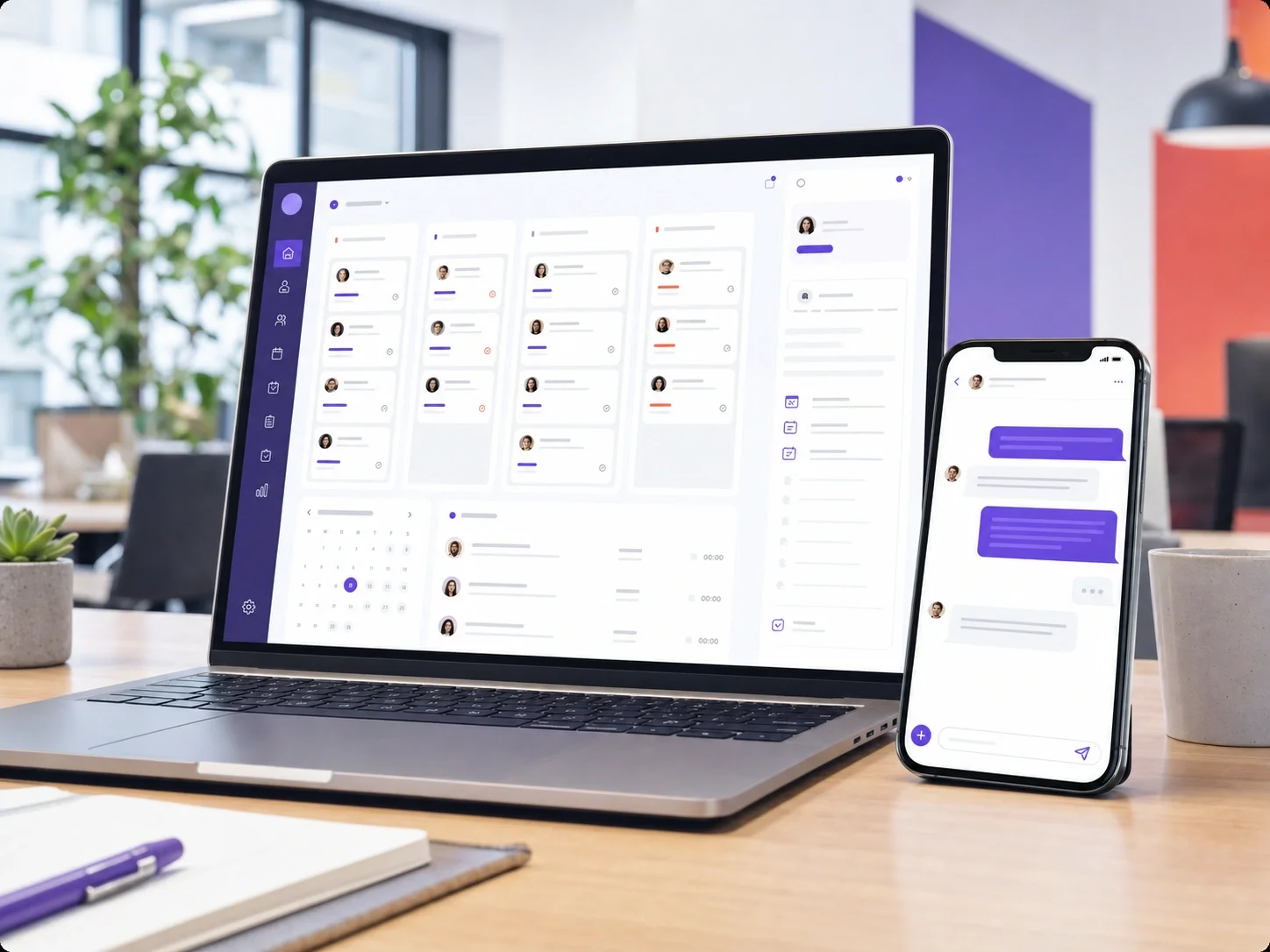
How to double your hiring throughput without adding recruiters
High-volume hiring usually means hiring more recruiters too. It does not have to. Here is how to grow throughput by removing the repetitive work that eats your team's day.

What conversational AI actually does in hiring (and what it doesn't)
Conversational AI in recruiting is easy to misunderstand. It is not a chatbot that replaces recruiters. Here is a grounded look at the work it does and the decisions it leaves to people.
The hidden cost of your application form
Every field on your application form quietly costs you candidates. Here is why long forms leak your best applicants — and what replacing the form with a conversation does to completion rates.