
How to double your hiring throughput without adding recruiters
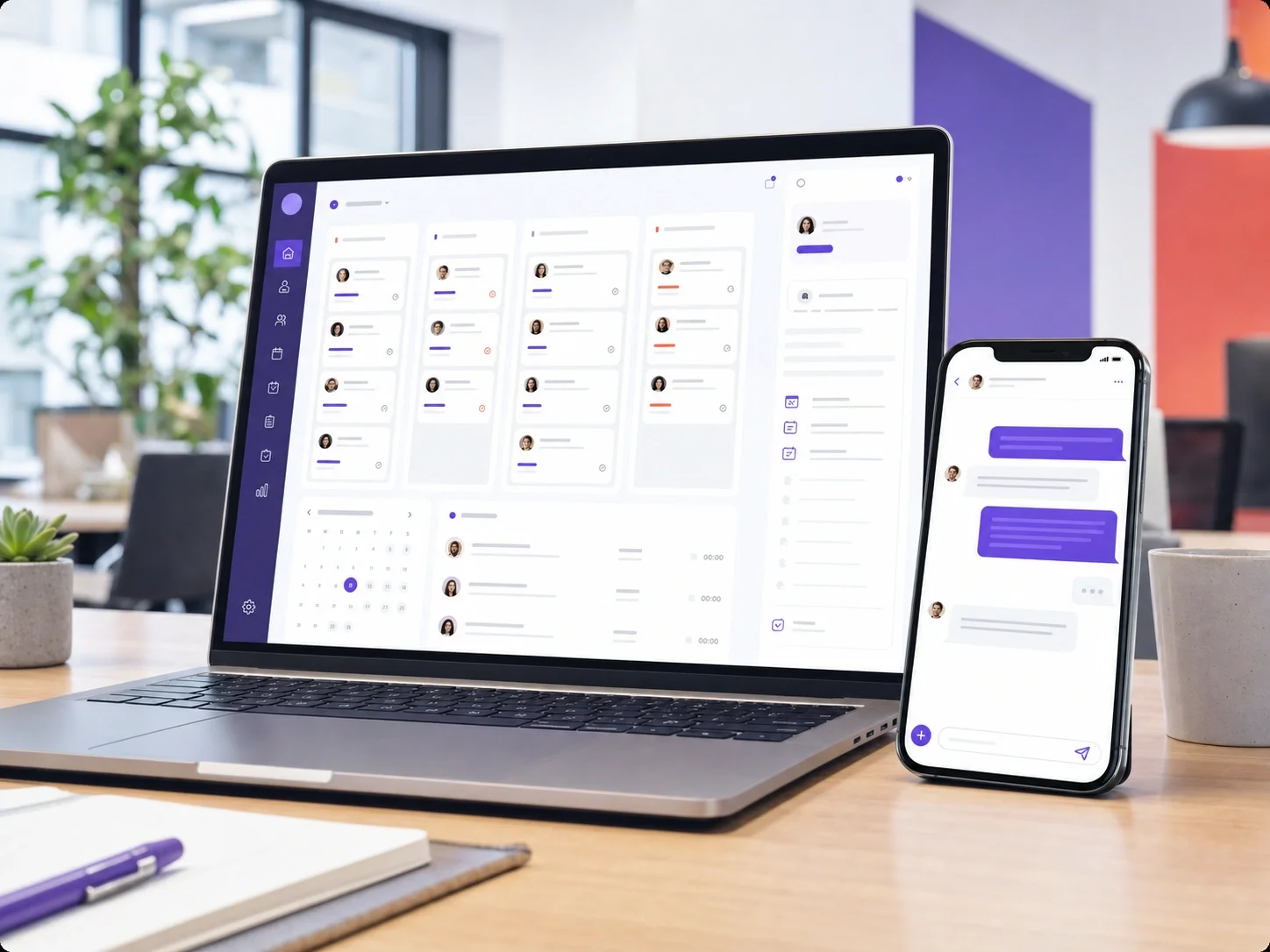
When hiring volume goes up, the instinct is to add recruiters. More roles, more applicants, more people to manage them. But headcount scales linearly and slowly, you have to find, hire, and train the very recruiters who are supposed to fix your hiring problem. By the time they are ramped, the volume has changed again.
There is a better lever. Most of a recruiter's day is not spent on judgment. It is spent on coordination: acknowledging applications, asking the same five screening questions, chasing availability, rescheduling, and reminding people about interviews. None of that requires a person. All of it consumes one.
Find the work only people should do
Start by separating two kinds of work. The first is judgment: deciding whether a candidate is a fit, conducting the interview, making the call. The second is coordination: the mechanical steps that move a candidate from one stage to the next. Judgment is where recruiters add value. Coordination is where they lose their day.
When you map a typical week, the split is lopsided. A recruiter handling high volume can spend the majority of their hours on coordination and only a sliver on judgment. That is backwards. The goal is to flip the ratio, automate the coordination so the judgment work gets the time it deserves.
Let automation handle the repeatable steps
Screening is the clearest example. Your knockout questions are the same for every applicant to a given role. Availability, location, certifications, right-to-work, these are yes-or-no gates that do not need a human to ask. Joy asks them the instant someone applies and advances only the candidates who pass, ranked by fit.
Scheduling is the second. Coordinating a single interview can take a dozen messages back and forth. Across hundreds of candidates, that is a full-time job nobody wants. Self-scheduling that respects every interviewer's calendar removes the back-and-forth entirely. Candidates pick a time, get a reminder, and show up.
Throughput is a math problem
Once coordination is automated, the math changes. A recruiter who was personally moving fifty candidates a week can oversee five hundred, because they are no longer the one sending each message. They review ranked shortlists, make decisions, and handle the conversations that genuinely need a person.
This is how you double throughput without doubling the team. You are not asking recruiters to work faster or longer. You are removing the work that never needed them in the first place, and giving the same people far more reach. The volume can grow. The headcount does not have to.
Keep reading
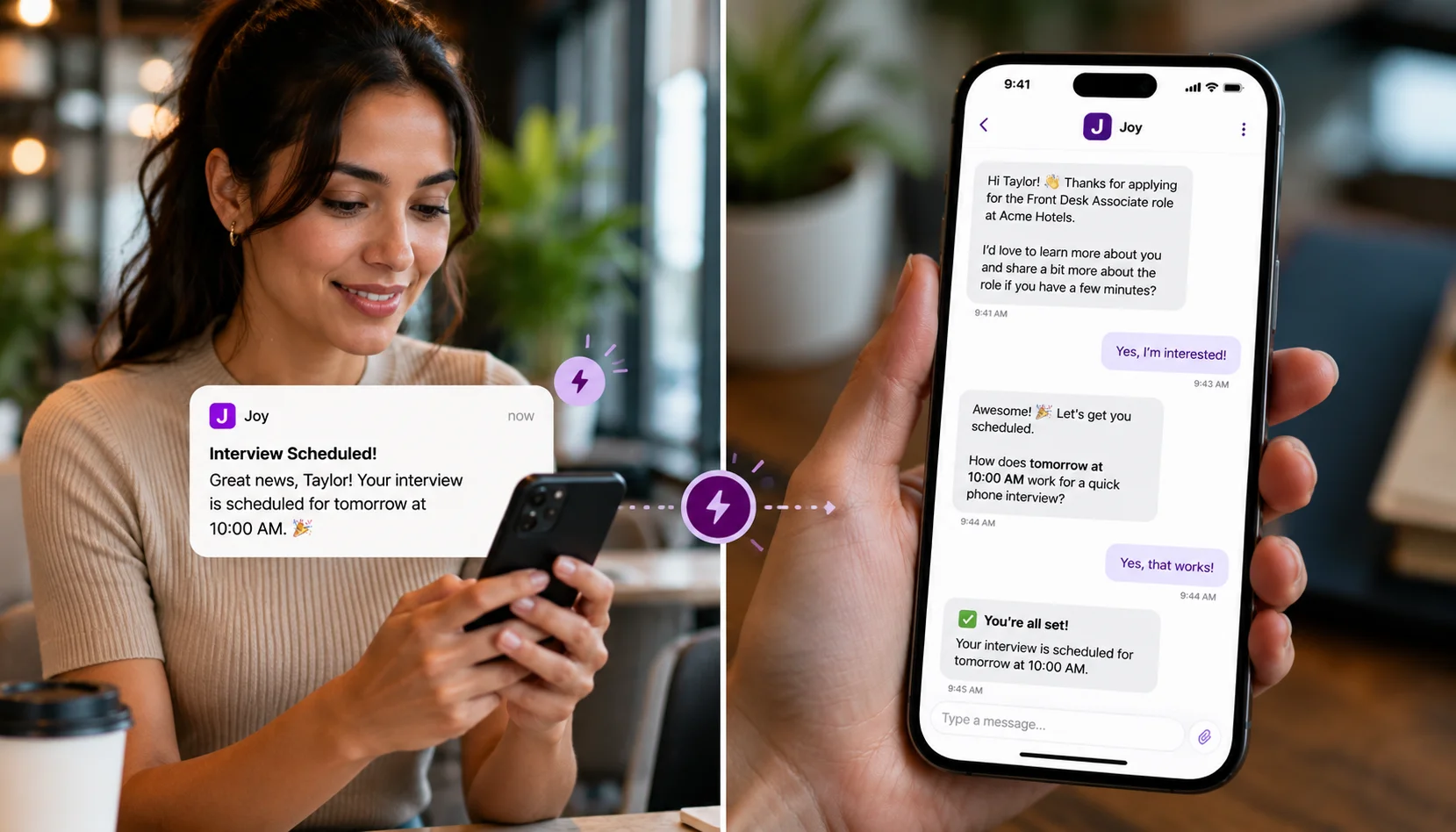
The first reply wins: why response speed decides your best hires
Strong candidates apply to several jobs at once and commit to whoever answers first. Here is why the first reply matters more than the perfect job ad, and how to make it instant.

What conversational AI actually does in hiring (and what it doesn't)
Conversational AI in recruiting is easy to misunderstand. It is not a chatbot that replaces recruiters. Here is a grounded look at the work it does and the decisions it leaves to people.
The hidden cost of your application form
Every field on your application form quietly costs you candidates. Here is why long forms leak your best applicants — and what replacing the form with a conversation does to completion rates.