
What conversational AI actually does in hiring (and what it doesn't)

Conversational AI is one of the most talked-about and least understood tools in recruiting. To some it sounds like a gimmick, a chatbot bolted onto a careers page. To others it sounds like a threat, software that replaces the recruiter. Both pictures are wrong, and both get in the way of using the technology well.
The honest version is more useful and less dramatic. Conversational AI is very good at a specific, bounded set of jobs in hiring, and deliberately bad at others. Knowing the line is the difference between a tool that gives your team its time back and one that frustrates candidates.
What it is genuinely good at
It is good at being available. A candidate can ask about pay or start date at any hour and get an accurate answer immediately, without a recruiter on shift. That alone removes most of the silence that loses applicants.
It is good at consistency. Every applicant to a role gets the same screening questions, asked the same way, scored against the same criteria. There is no version where the fortieth applicant of the day gets a tired, rushed version of the conversation the first applicant got.
And it is good at coordination at scale. Booking interviews, sending reminders, collecting documents, nudging a candidate who has gone quiet, these are exactly the repetitive, high-volume tasks that wear a human team down and that software handles without fatigue.
What it should never do
It should not make the hiring decision. Judging whether someone is right for a role, reading the room in an interview, weighing a candidate who is unconventional but promising, that is human work, and pretending otherwise produces bad hires and worse experiences.
It should not hide that it is software. The best conversational AI is upfront. Candidates know they are talking to an assistant, the assistant does real work for them, and a person is clearly there for anything that needs one. Trust comes from honesty, not from a convincing impression of a human.
Joy is built around exactly this division of labor. It handles availability, screening, scheduling, and follow-up so the conversation never stalls, and it hands the candidate to your team the moment a real decision is on the table. The point is not to remove people from hiring. It is to remove the busywork that keeps people from hiring well.
Keep reading
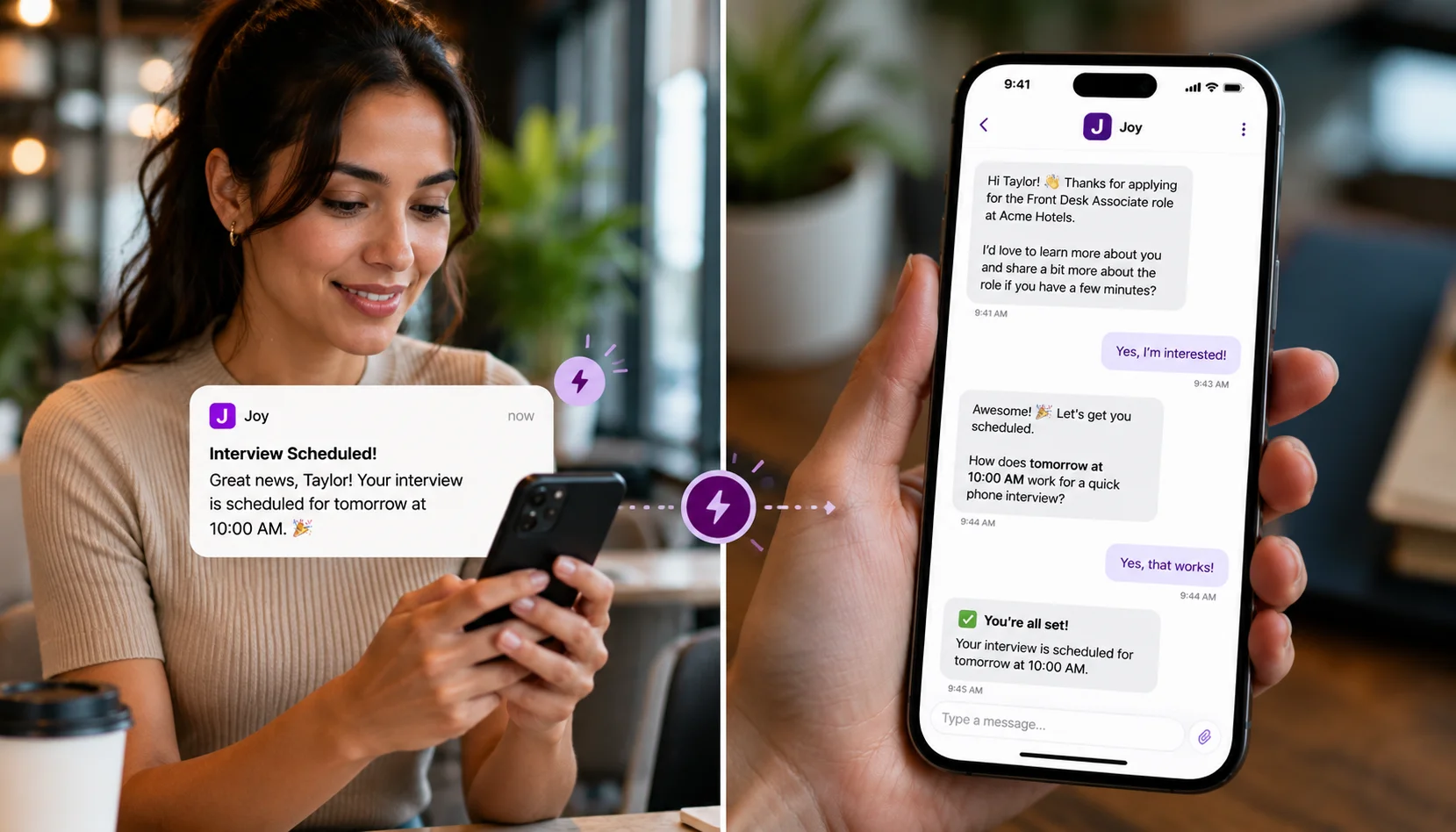
The first reply wins: why response speed decides your best hires
Strong candidates apply to several jobs at once and commit to whoever answers first. Here is why the first reply matters more than the perfect job ad, and how to make it instant.
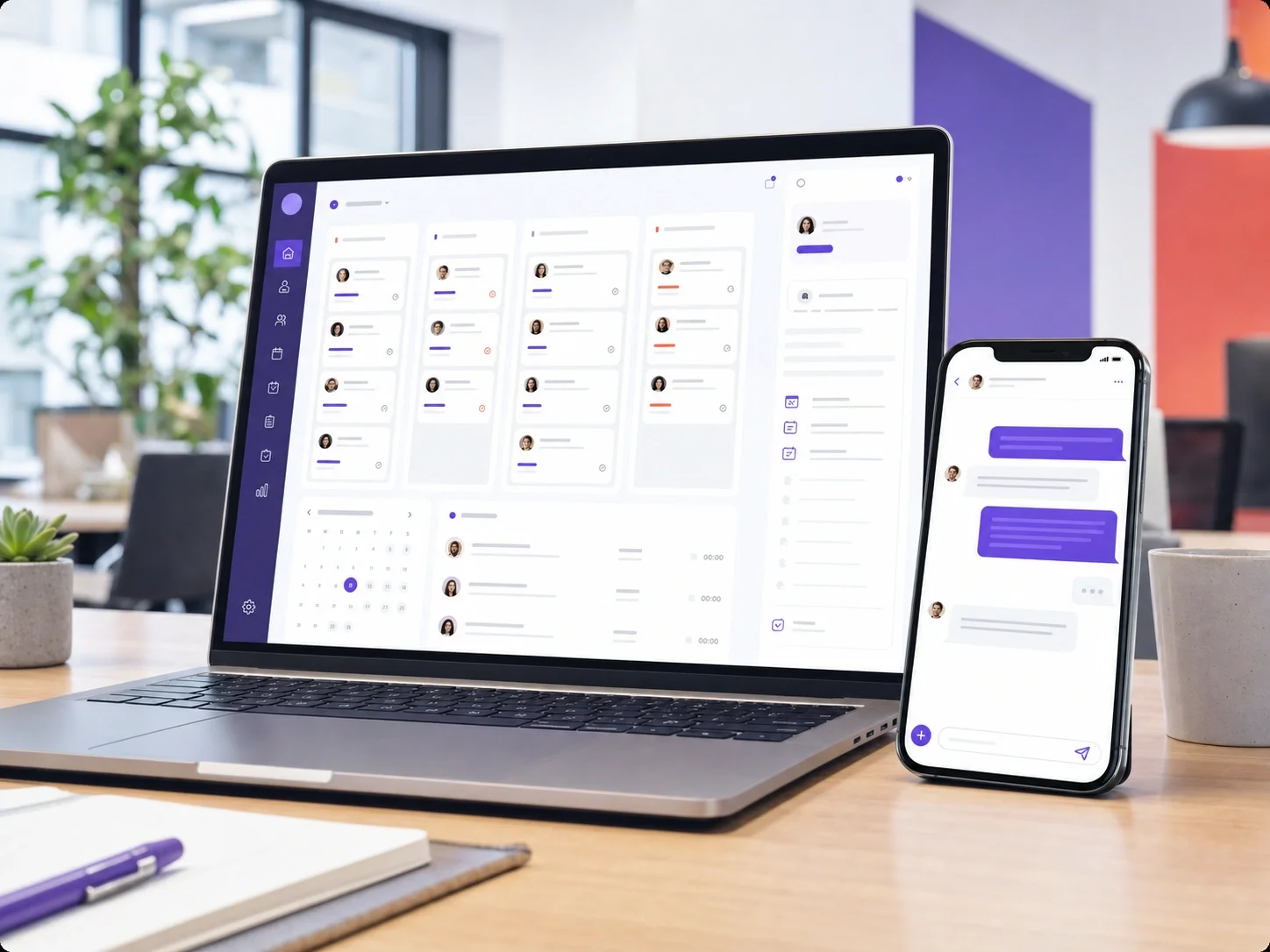
How to double your hiring throughput without adding recruiters
High-volume hiring usually means hiring more recruiters too. It does not have to. Here is how to grow throughput by removing the repetitive work that eats your team's day.
The hidden cost of your application form
Every field on your application form quietly costs you candidates. Here is why long forms leak your best applicants — and what replacing the form with a conversation does to completion rates.